From Frames to Vision
A journey of learning photography through shutter and shadow.
Category
Duration
Belongs
Tools
Project Summary
Project Overview
This project represents my progression in photography — a journey that began with technical exercises and evolved into a cohesive final folio. I started by experimenting with shutter speed, capturing motion blur and frozen moments to understand how time influences the image. Building on this foundation, I moved into RAW shooting and post-processing, where I learned to refine exposure, color balance, and detail through Adobe Camera Raw and Photoshop.
The next stage focused on light and color. By photographing at different times of day and under varying conditions, I discovered how lighting can transform atmosphere and how color grading can reinforce mood. These technical explorations led naturally into narrative photography, where I began to think beyond single images and instead use a sequence of photos to communicate story and emotion.
All of these stages came together in my final folio, a photographic study of Melbourne’s skyline and churches. In this series, I applied what I had learned — controlling shutter speed, shaping light, enhancing images in post-production, and constructing visual narratives — to create a project that is both technically sound and personally meaningful. The folio marks the transition from practice to vision, demonstrating how early exercises built the skills necessary for a more mature, thematic body of work.
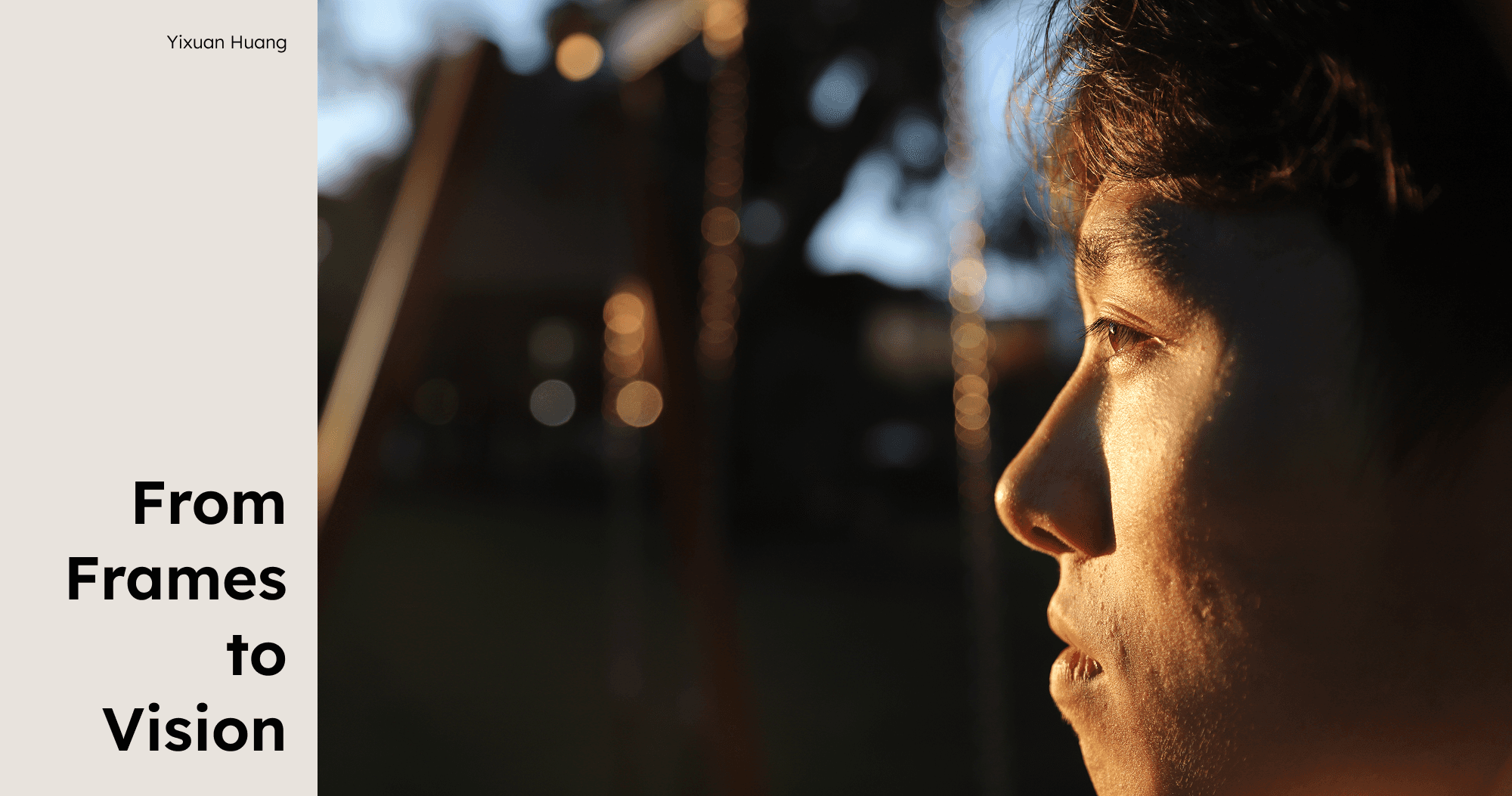
"This is a really beautiful portrait. You’ve approached it creatively, paying attention to both lighting and angle, resulting in an image that feels unique and personal rather than conventional. You’ve also used a wide aperture effectively to create a shallow depth of field, as requested. This is a thoughtful and well-executed portrait."
Heidi Wentworth-Ping
Tutor, Art and Photograph
Shutter Speed Exercise
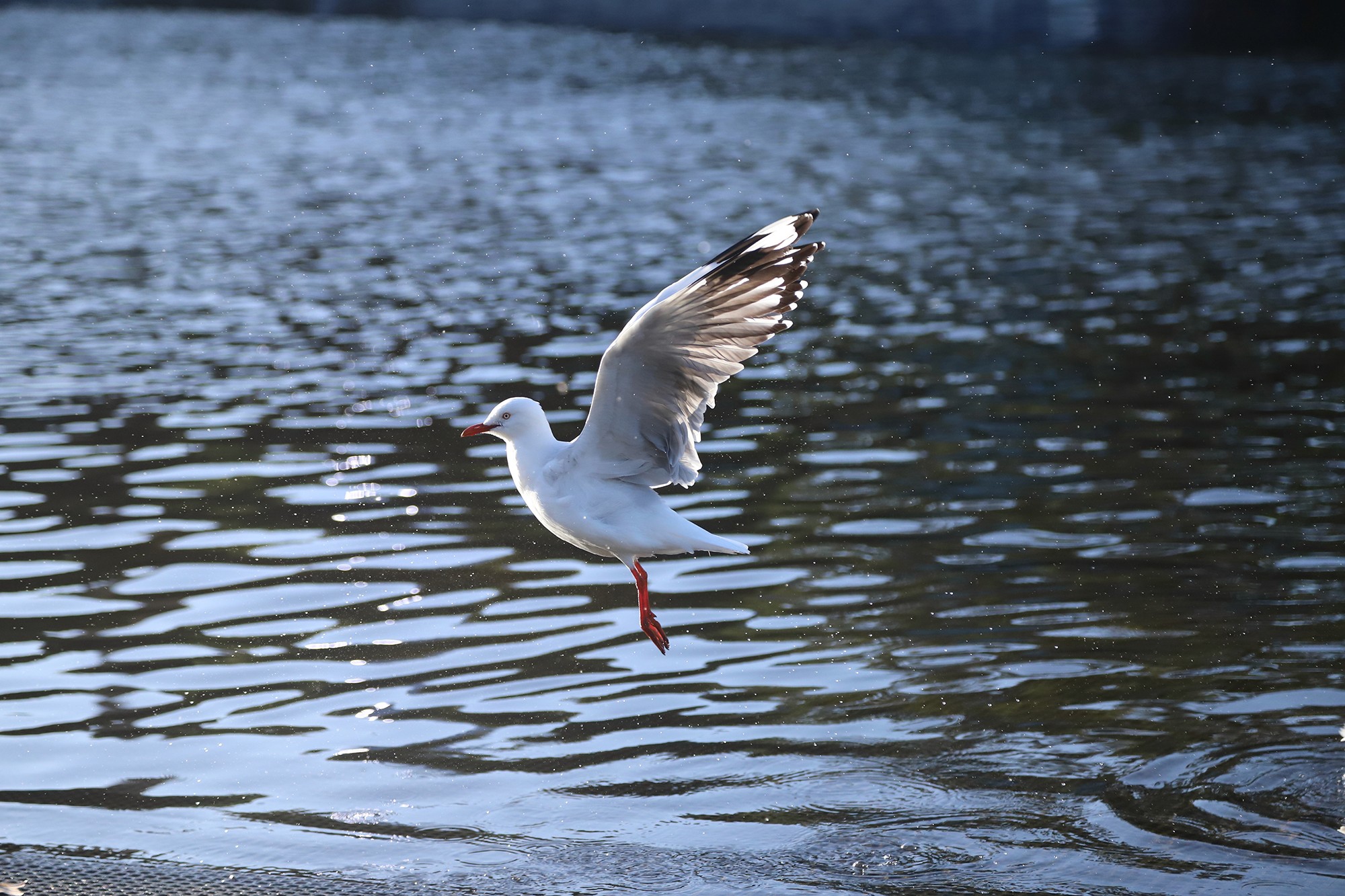
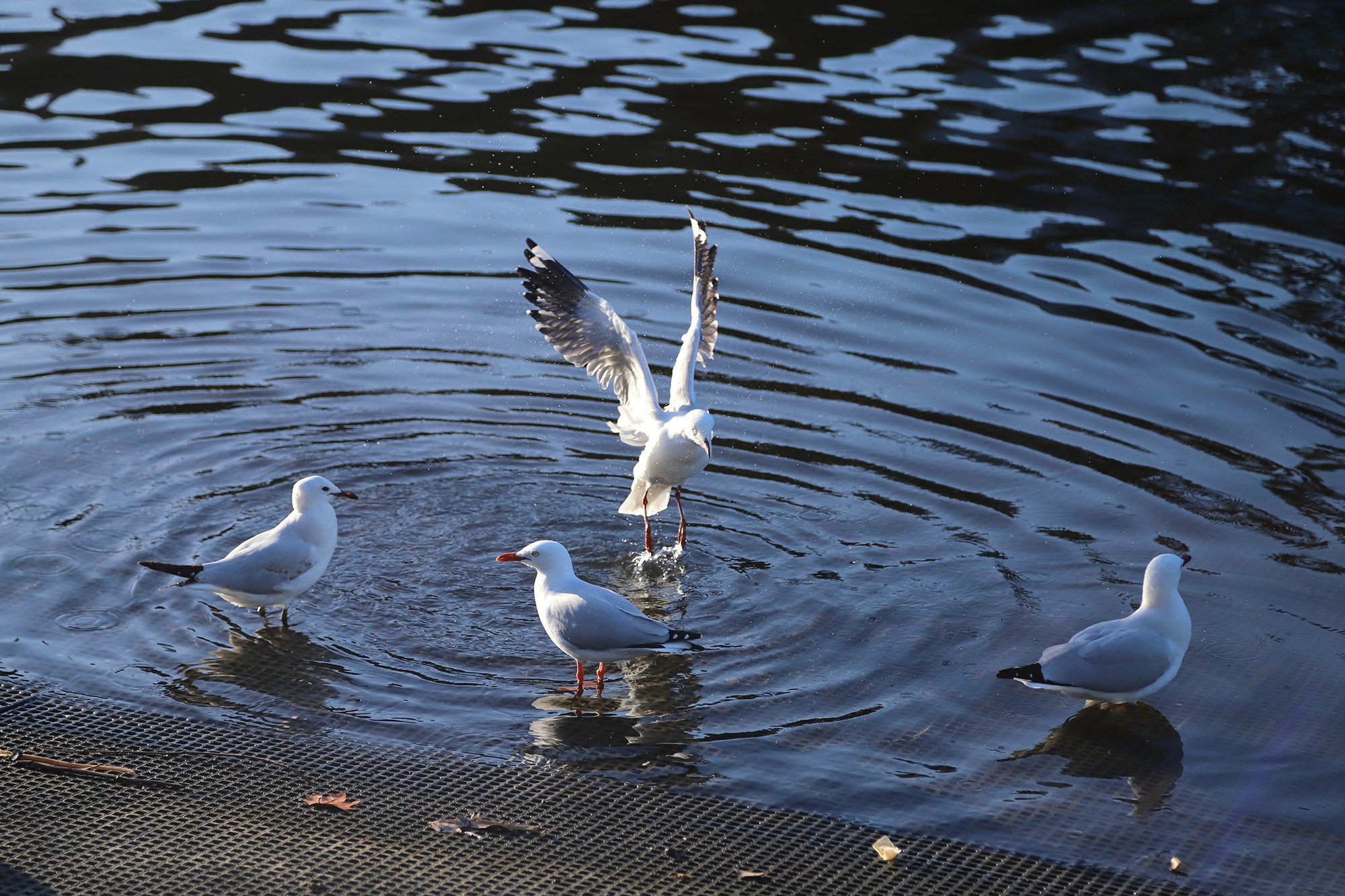
This series was taken on April 5, 2025. I experimented with high shutter speed to capture the moment when a seagull takes off. By finding a suitable angle, I allowed sunlight to shine on its wings and body from the side, highlighting the fine details. The high shutter speed enabled me to capture what the naked eye could hardly freeze — the flapping wings, and the ripples formed as its feet touched the water. These details not only convey a sense of movement but also add a poetic and artistic quality to the image.
Technical Notes
High shutter speed (around 1/1000s) to freeze the motion of the seagull’s wings
Directional light: using side backlighting to emphasize detail
Compositional space left intentionally to highlight movement and its relation to the water surface
This exercise gave me my first strong impression of how shutter speed directly influences the meaning of an image. A fast shutter is not merely a technical setting — it is a form of expression that preserves fleeting moments permanently.
The seagull flies very fast, I want to shoot it by way of high shutter speed, I found a suitable Angle to let the sun shine on it, can let us see more detail.
Date: April 5, 2025
Settings: ISO 1600 | 105mm | f/4.5 | 1/4000s
The high shutter allows me to capture the moment when the seagull takes off, which is difficult for me to capture with the naked eye. My intention is to capture this moment, and the ripples caused by its feet touching the water are very artistic.
Date: April 5, 2025
Settings: ISO 1000 | 105mm | f/4.0 | 1/4000s
Portrait Effects
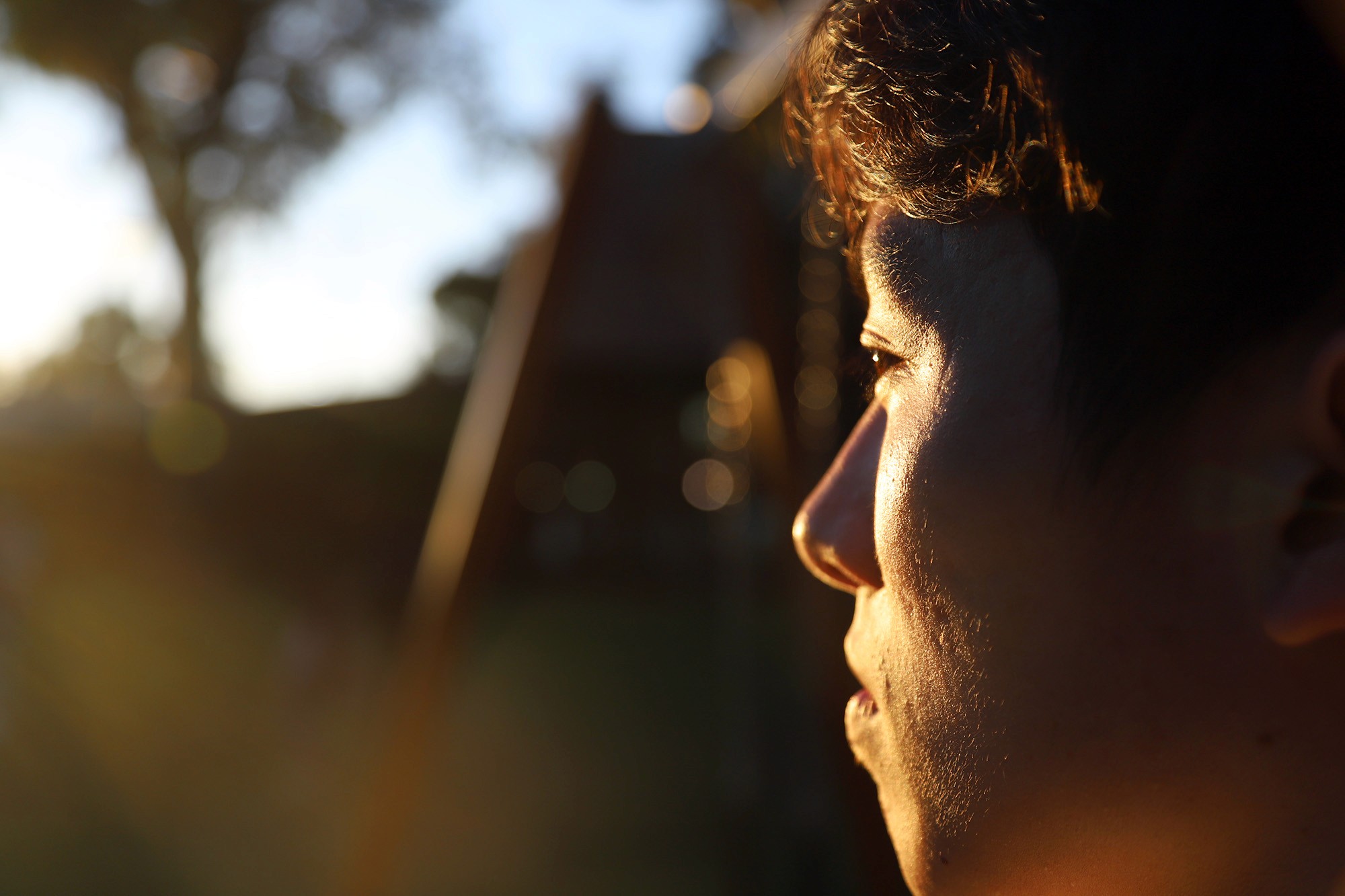
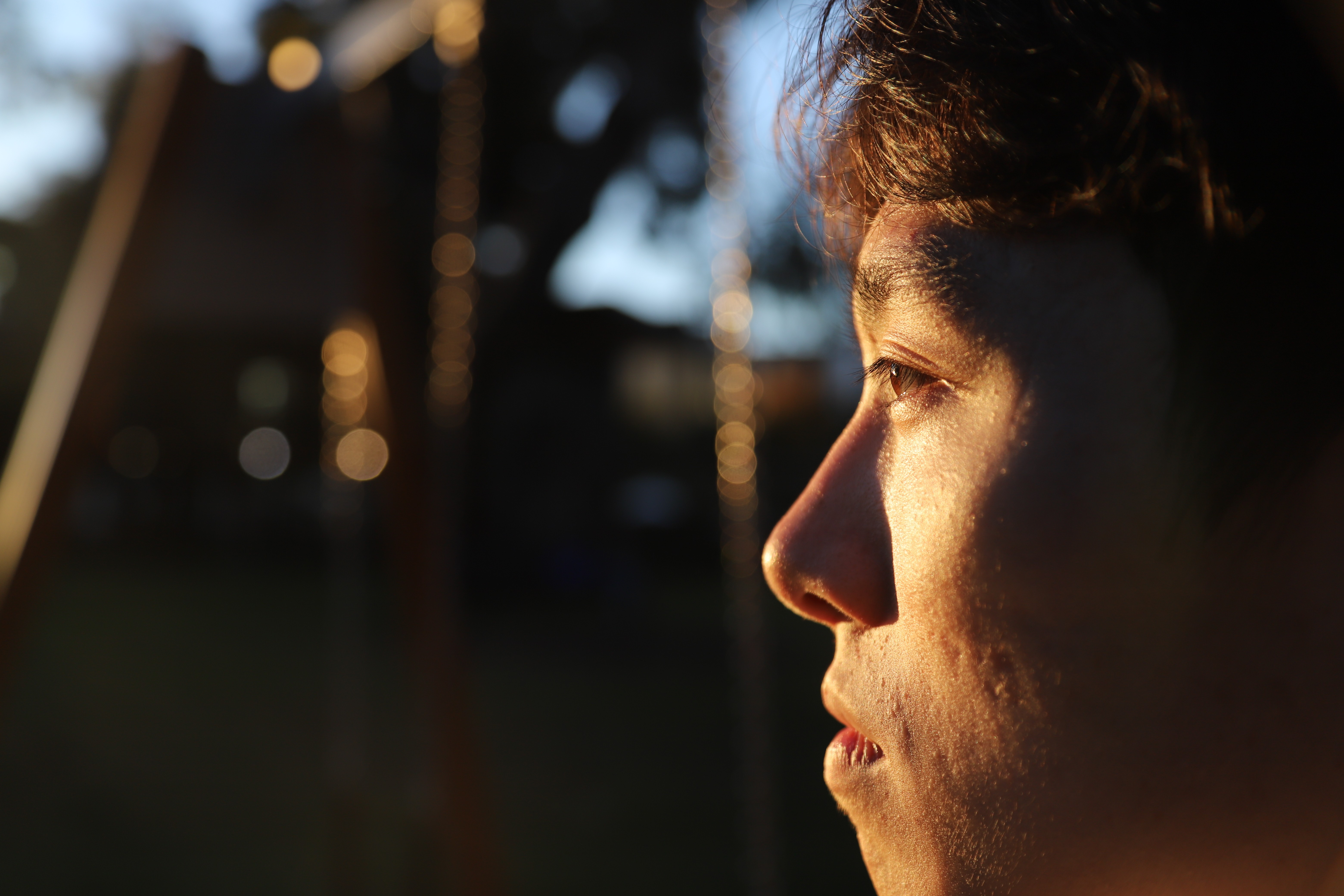
In this exercise, I photographed my boyfriend’s side profile using natural light. The sun was shining on his face, and I deliberately adjusted my position to avoid direct rays, leaving only a soft glow. This approach maintained facial details while creating a warm tone in the overall atmosphere. The result is a portrait with a natural, sunlit warmth.
Technical Notes
Wide aperture f/4 to create shallow depth of field and emphasize the subject
Light control: avoiding direct sunlight to soften skin texture
Warm color tone formed naturally, adding approachability and realism
The 50mm focal length is considered a classic choice for portraits, as it closely resembles the human eye’s perspective, providing natural proportions while preserving detail
Portrait photography is not only about recording a person but also about interacting with light. This exercise made me realize the importance of light direction and atmosphere. By making subtle use of natural light, an ordinary portrait can be infused with emotional impact.
Date: April 8, 2025
Settings: ISO 100 | 50mm | f/4 | 1/250s
Date: April 8, 2025
Settings: ISO 100 | 50mm | f/4 | 1/250s
Through these two exercises, I gradually developed a foundational understanding of photography. The shutter speed practice taught me how to freeze fleeting moments and capture details that the naked eye might miss. The portrait exercise, on the other hand, showed me how light not only shapes brightness and shadow but also conveys atmosphere and emotion. Together, they revealed that photography is both a technical mastery and a creative choice.
Photographic Image Editing
I worked with an image captured in RAW format and developed it through Camera Raw and Photoshop. The focus was on enhancing visual expressiveness while maintaining flexibility through non-destructive editing.
Editing Process:
Camera Raw adjustments: refined white balance, exposure, highlights, shadows, and overall histogram.
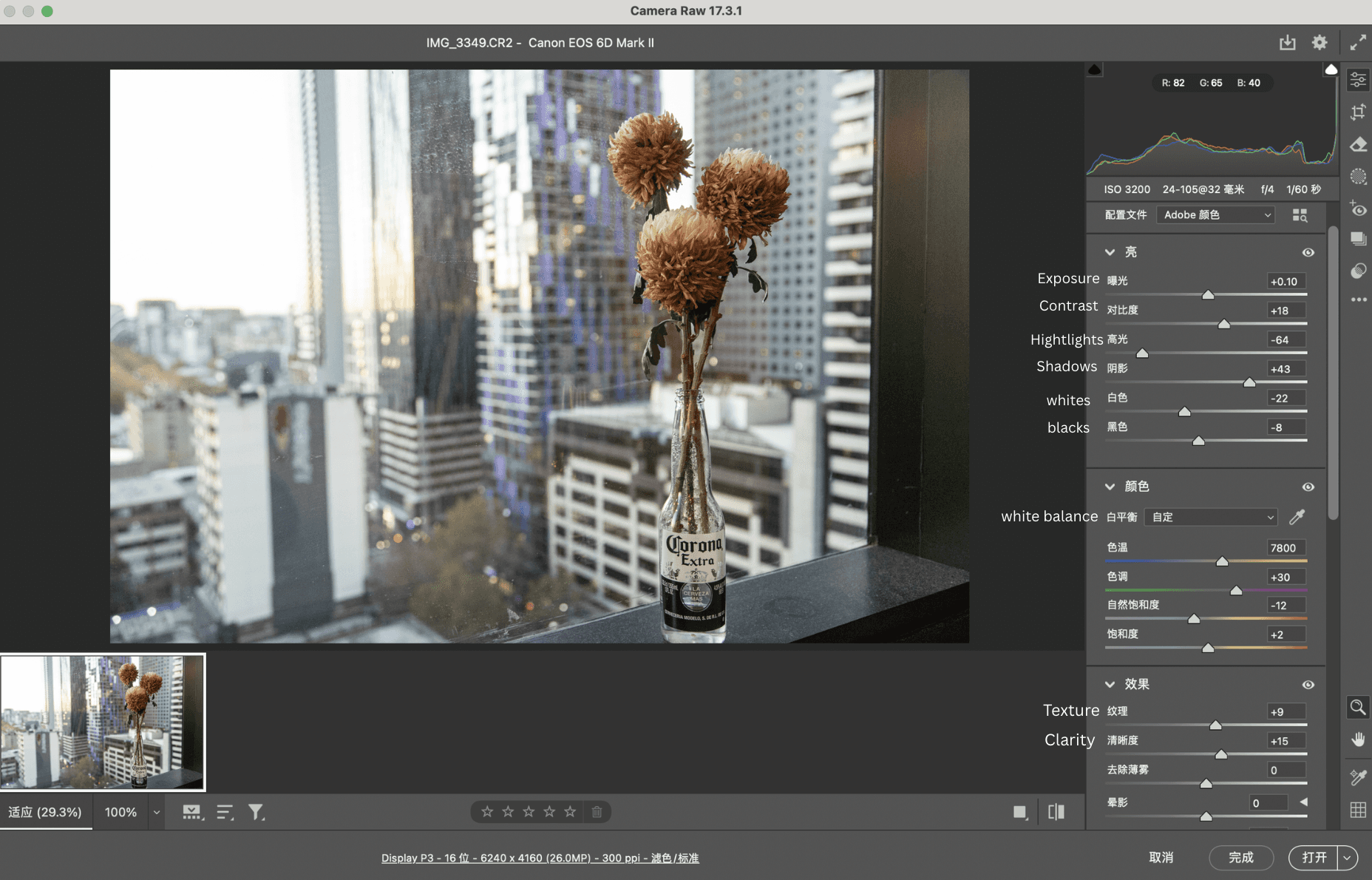
Lens profile corrections: fixed vignetting and distortion.
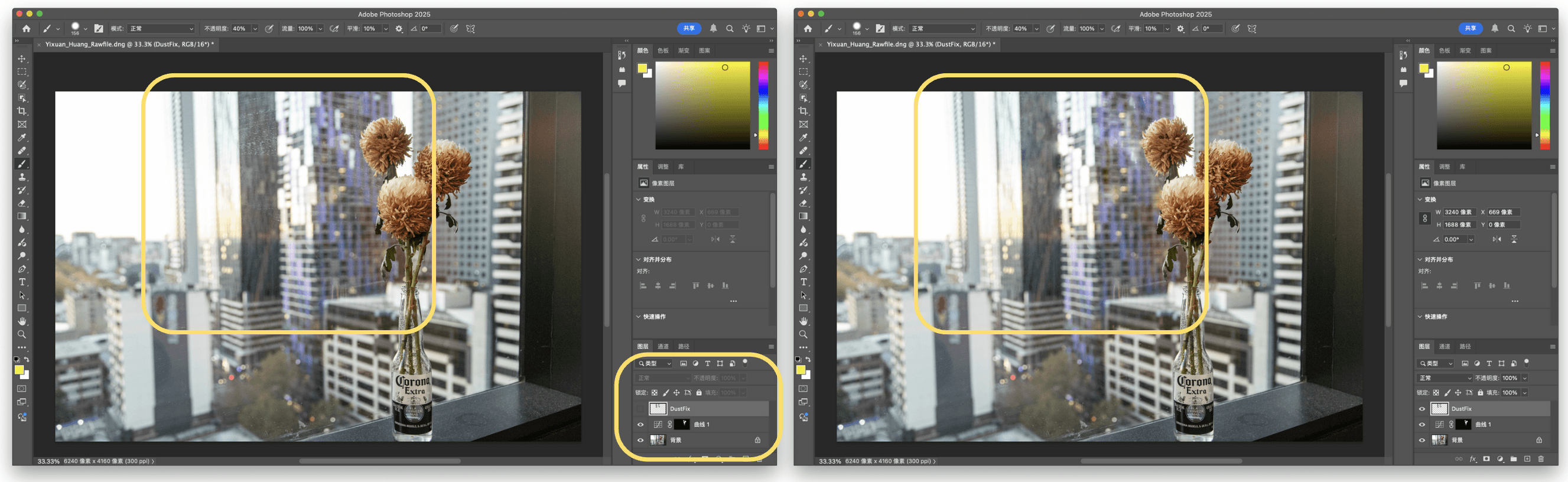
Photoshop local adjustments:
Brightened flowers with layer masks to increase expressiveness;
Removed stains and dust from the glass with the healing brush tool;
Sharpened image edges with masking to improve clarity.
Non-destructive workflow: preserved layers and structures for flexible adjustments.
The original image had uneven lighting and limited detail → the final image achieved balanced tones and emphasized texture. Post-processing enhanced spatial depth and narrative quality.
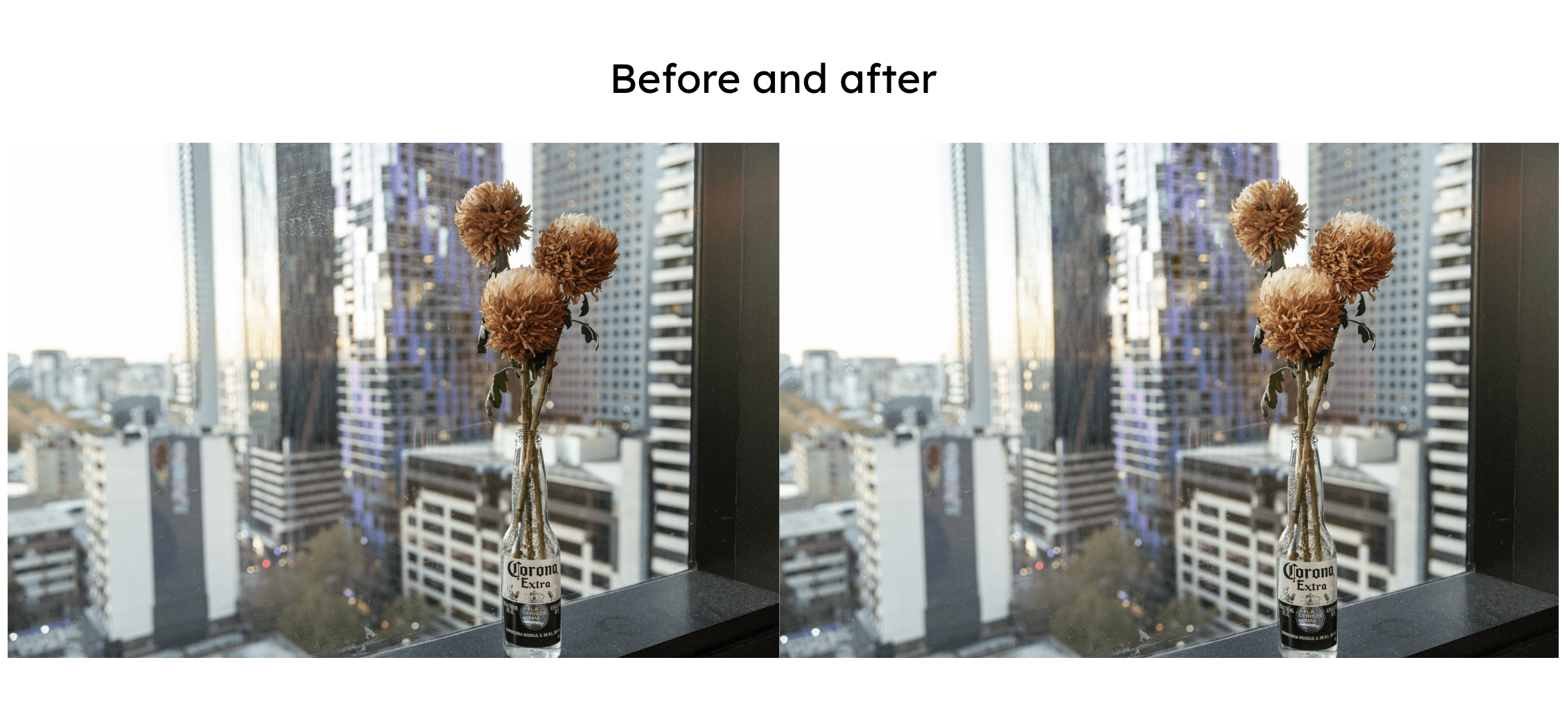
This exercise taught me the importance of RAW post-processing within the photographic workflow. The camera captures only the raw material, while editing brings the image closer to the photographer’s vision. It established a complete workflow from capture to output and laid the foundation for the presentation of my final folio.
Final Folio
Before beginning the folio, I created a mood board to guide my direction. The visual styles of eight photographers deeply inspired me; their delicate use of light and shadow, geometric lines, and atmospheric space demonstrated how photography can transform the city into a visual narrative. In particular, I was influenced by Peter Bialobrzeski’s urban atmospheres, Edward Burtynsky’s sense of spatial tension and detail, and Robert Adams’ ability to use light for environmental storytelling.
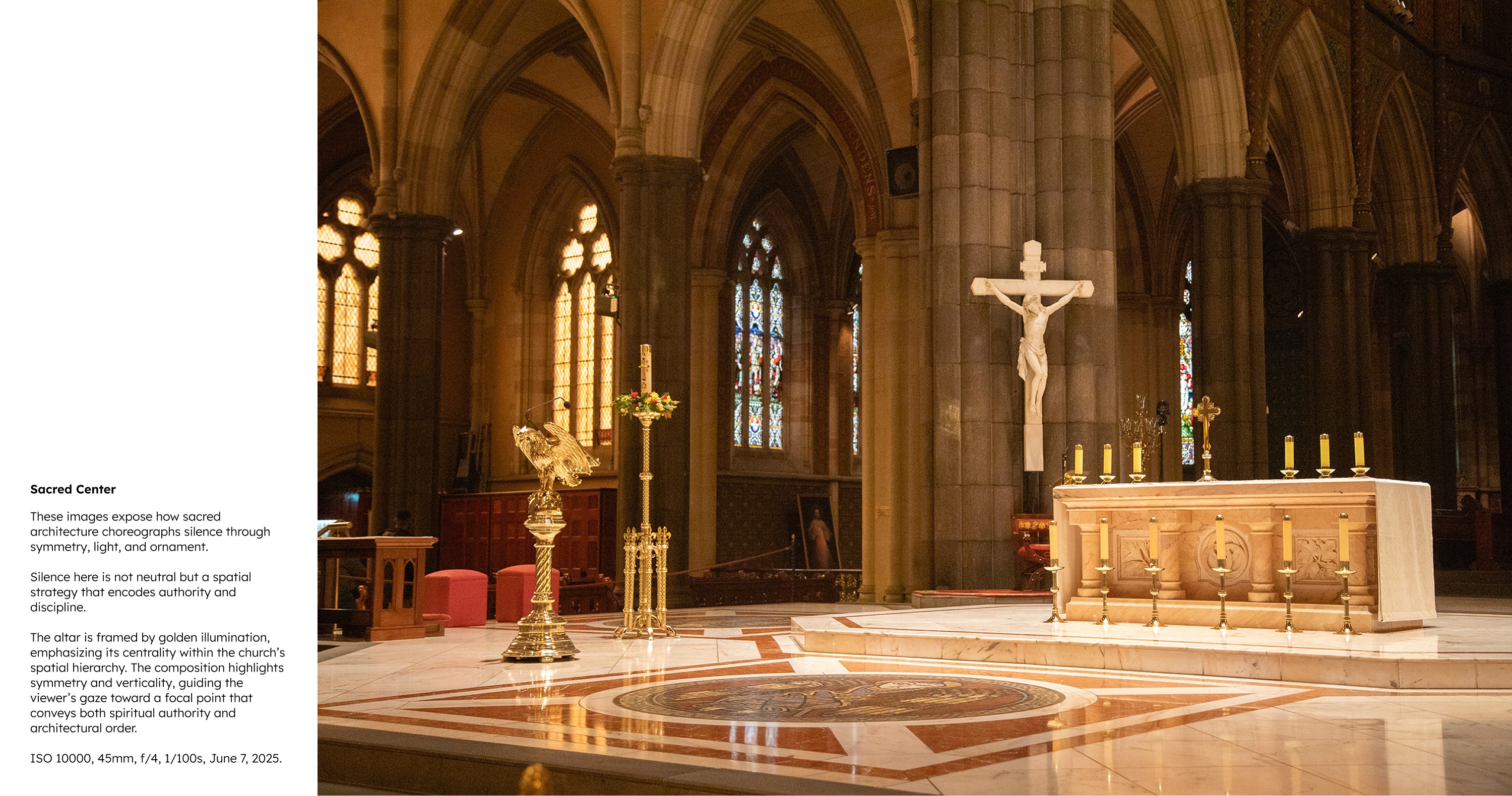
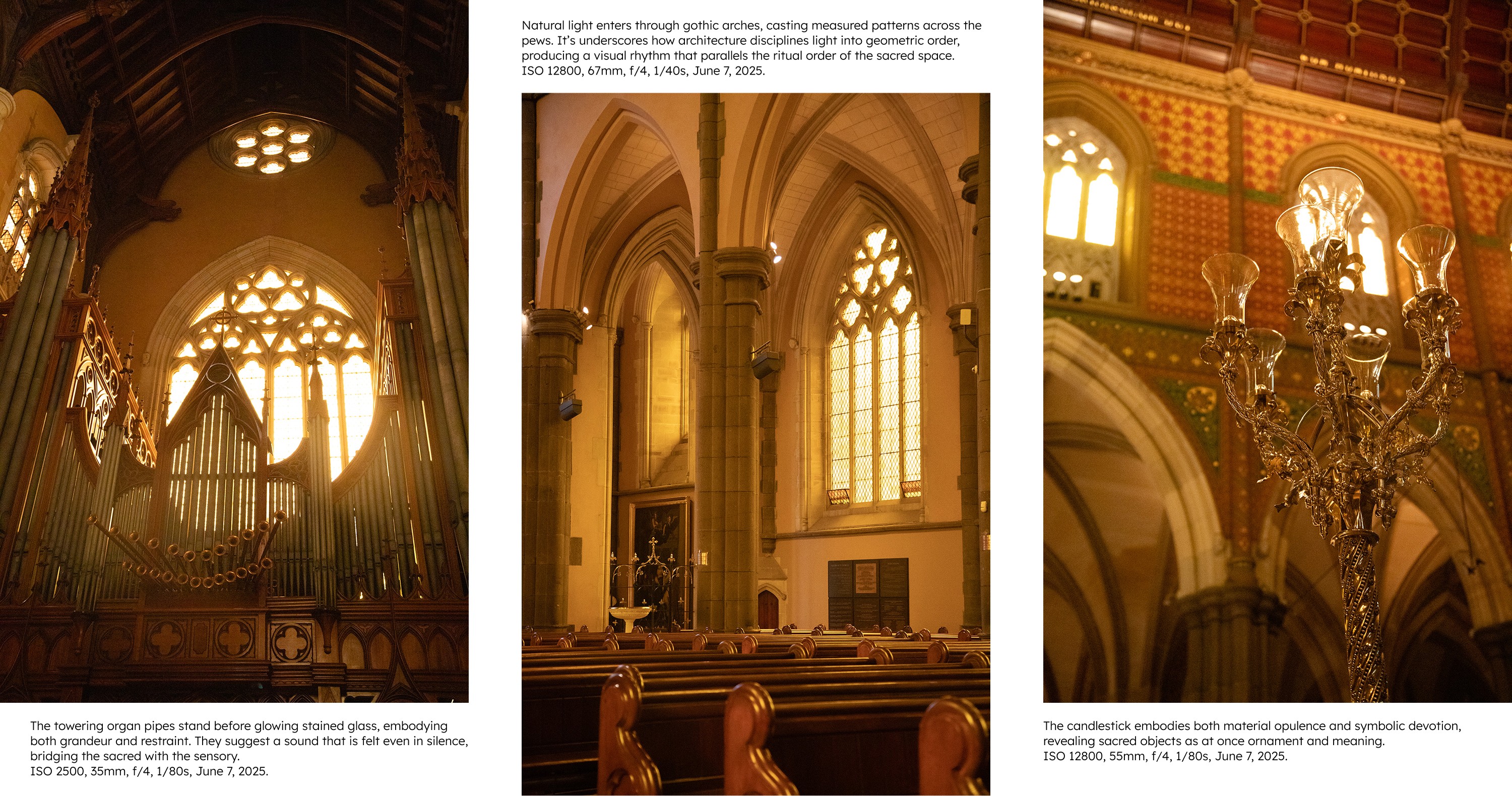
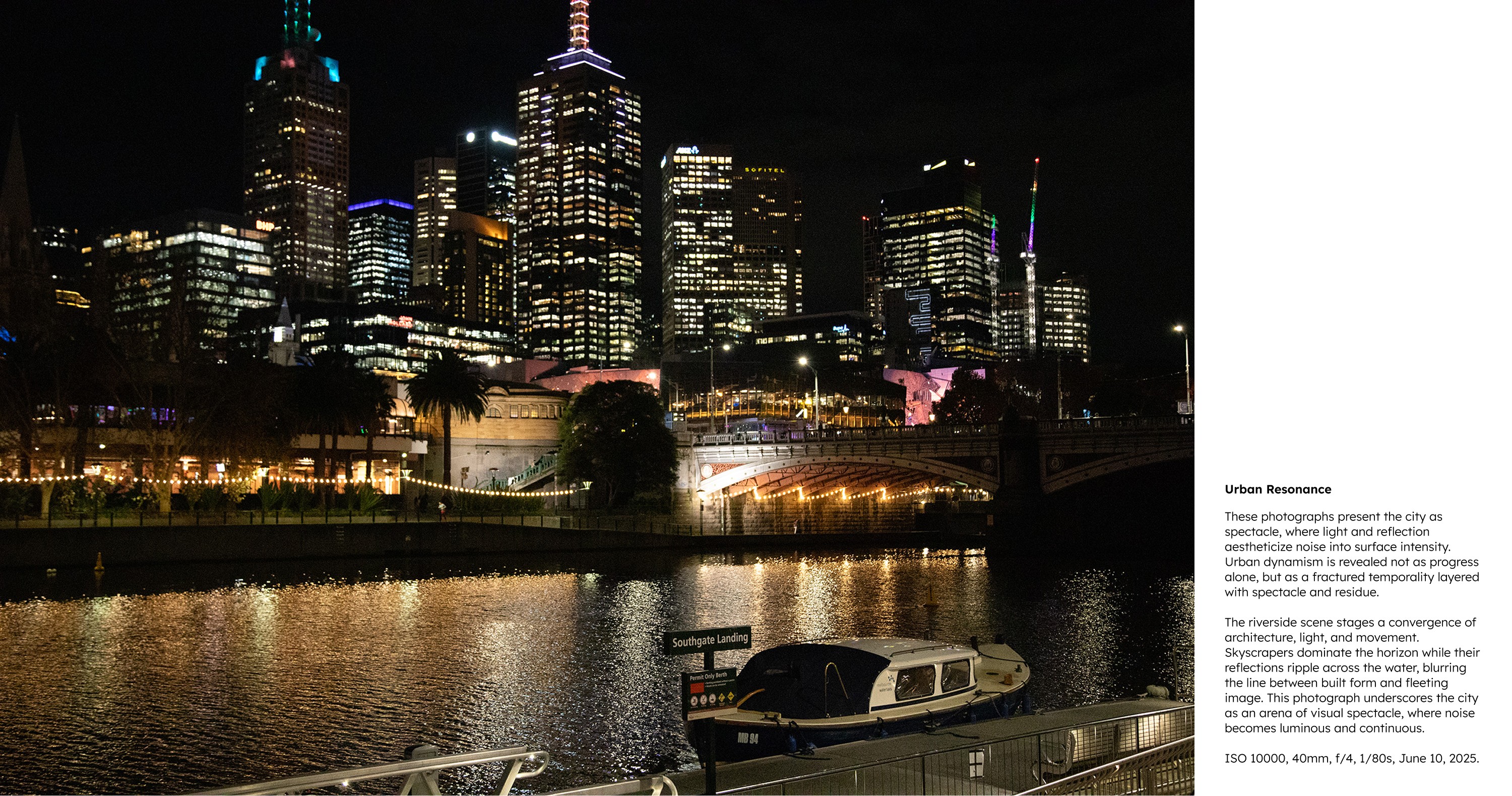
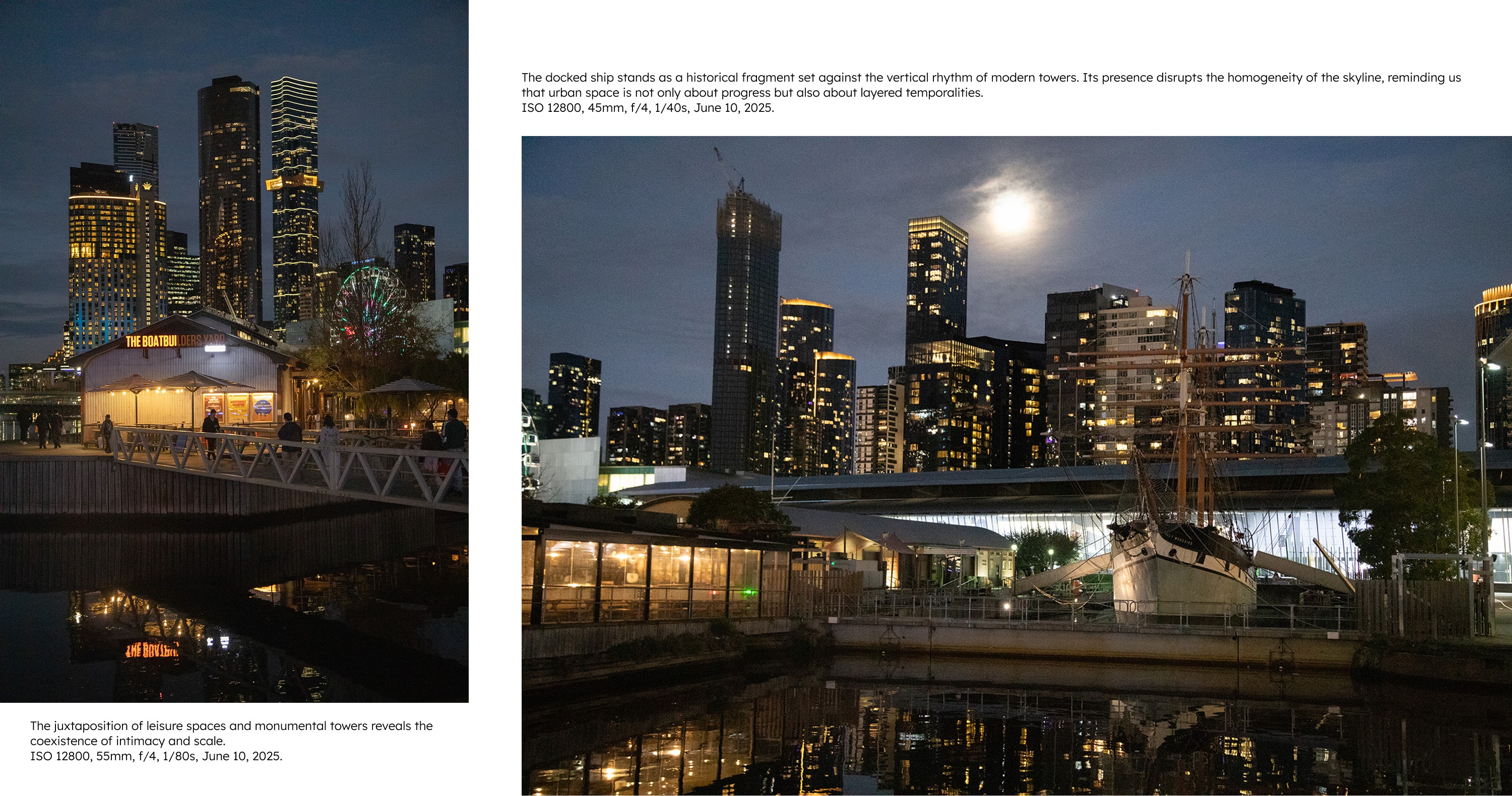
These references made me realize that photography is not only about documenting what we see, but also about constructing mood and theme through light, form, and shadow. Inspired by this, I chose to juxtapose the silence of churches with the noise of the vibrant city at night, exploring the theme of “The Coexistence of Silence and Noise.” The mood board served as an anchor during my process, helping me maintain visual consistency and thematic clarity, ensuring that the final folio reflects both artistic sensibility and personal vision.
Mood board:
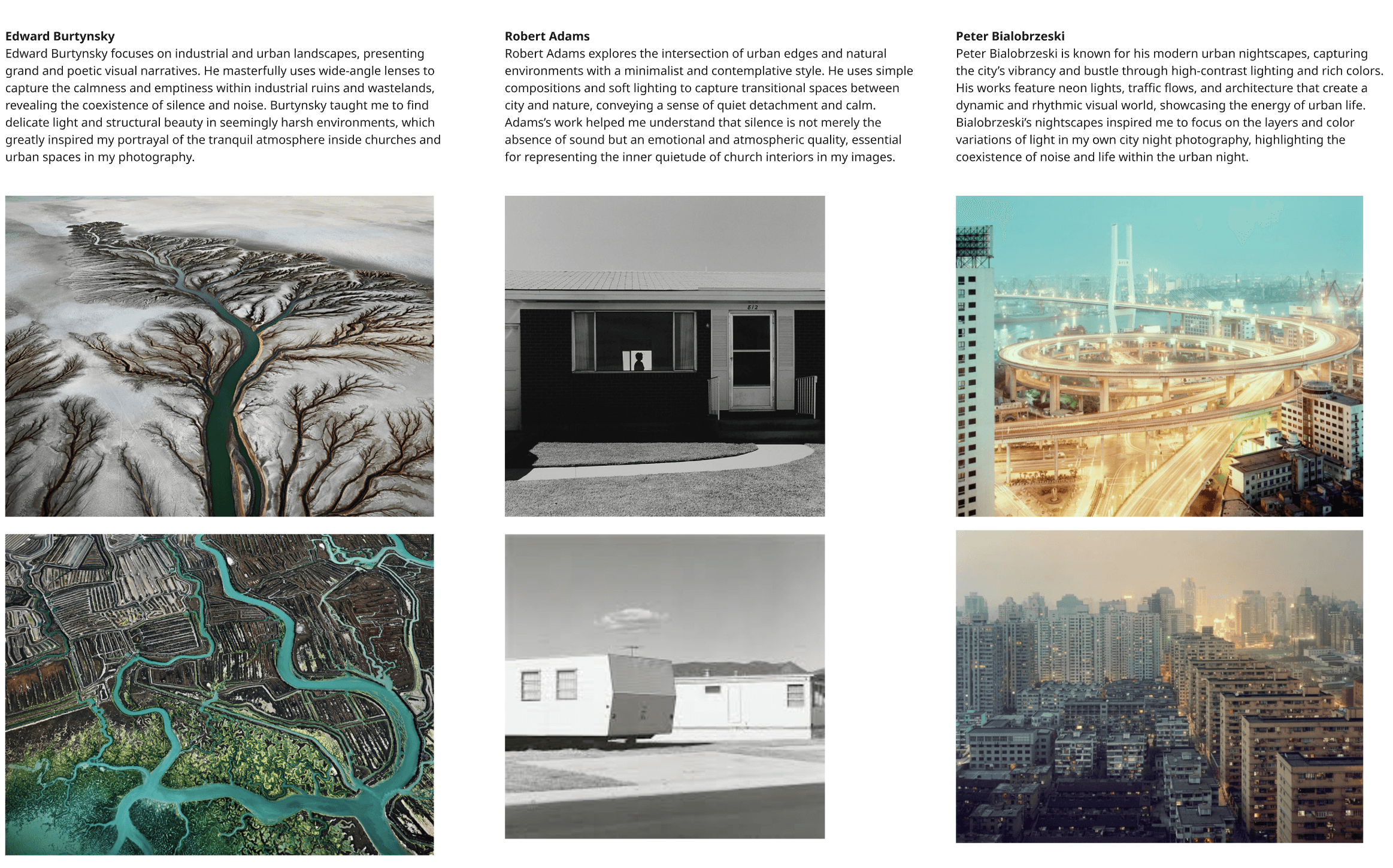
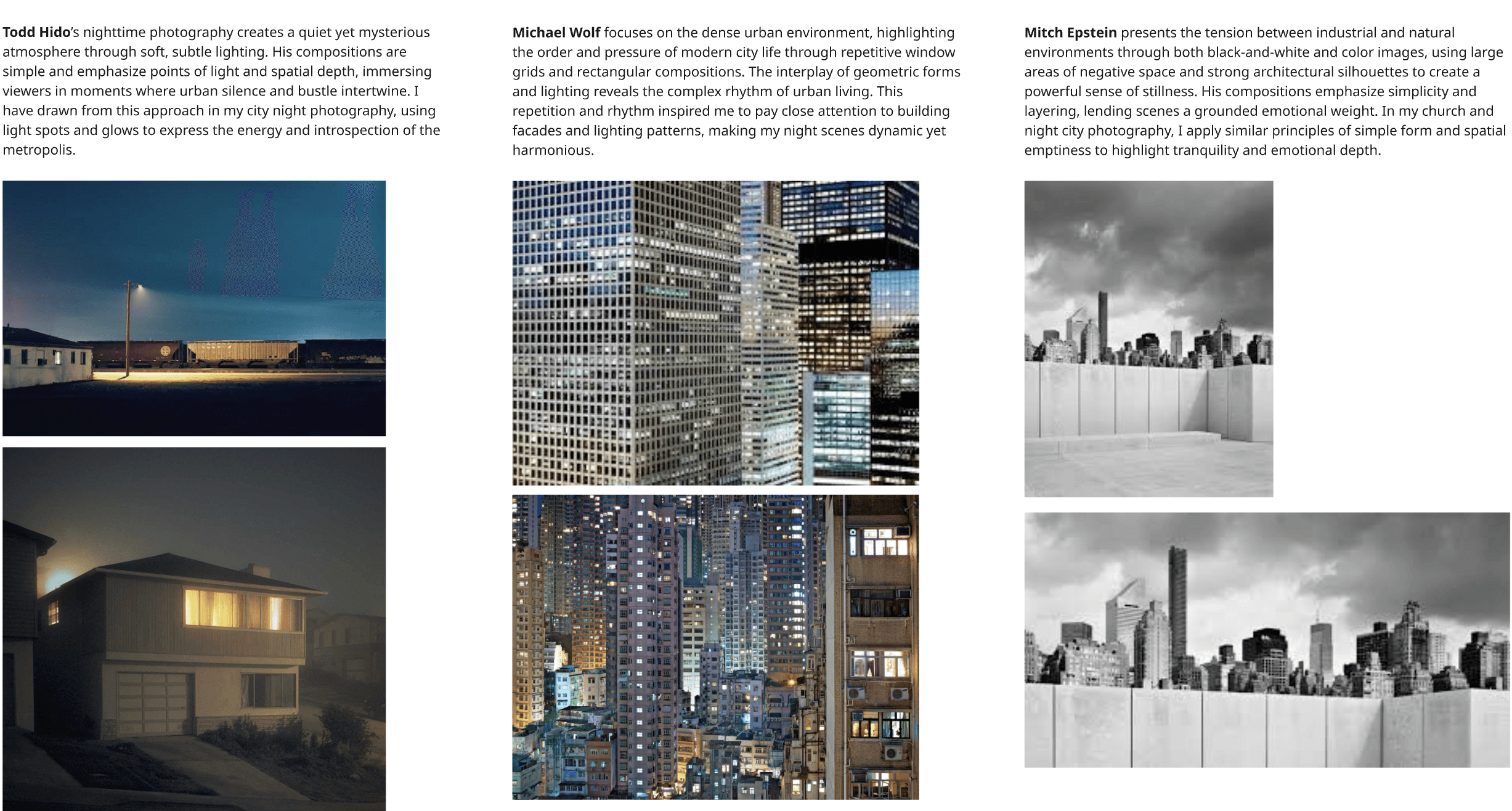
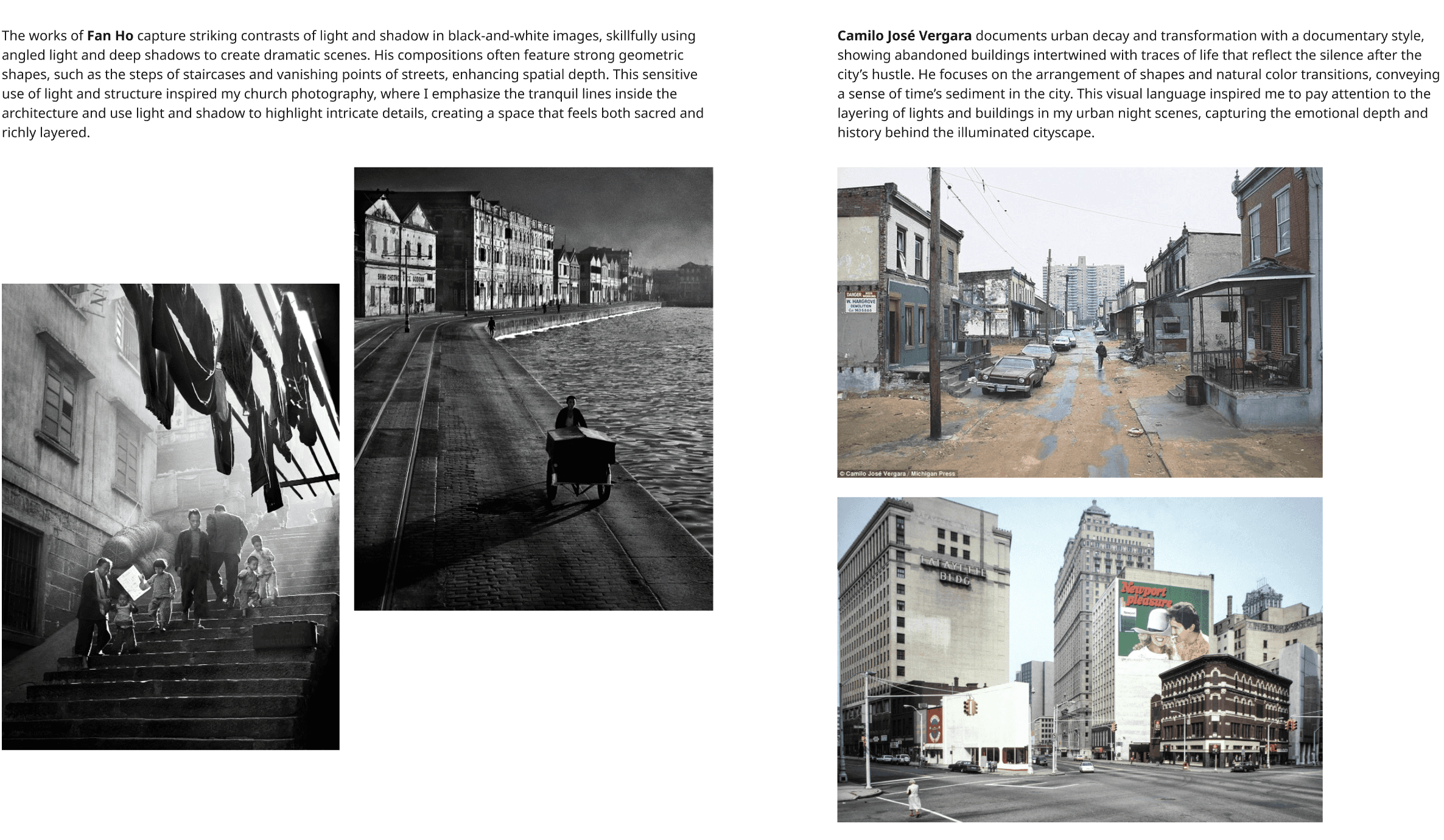
These 8 photographers’ visual styles have richly inspired my work on the theme of “The Coexistence of Silence and Noise.” Through delicate use of light and shadow, geometric architectural lines, and atmospheric space, I aim to present the symbiotic relationship between the quiet order of churches and the vibrant energy of urban life.
Photographer's Statement:
My chosen theme is “The coexistence of silence and noise in the urban landscape,” which explores the contrasts and blending of different urban spaces. For the silent spaces, I selected churches because when people enter, they naturally become quiet and experience a sense of inner calm and reflection. This quietness creates a powerful contrast with the vibrant and bustling scenes of the city at night, which are full of bright lights, movement, and energy, representing the dynamic life of the city. I was drawn to this theme because it reflects the complexity and diversity of urban environments, where stillness and activity coexist and shape our experience of the city. In searching for locations, I focused on places that offer strong visual and emotional contrasts—historic architecture versus modern skyscrapers, sacred spaces versus commercial districts. Photographers such as Peter Bialobrzeski, Edward Burtynsky, and Robert Adams inspired me; their skillful use of light, composition, lines, and forms reveals the social and environmental stories behind the city. In creating my images, I carefully chose lighting and composition to emphasize the tension and interaction between silence and noise, using lines, shapes, and shadows to add depth and cohesion, making the entire portfolio visually consistent and thematically clear.
The following page will show the works: