Temple of Heaven
A 3D modeling journey of the Temple of Heaven, from structure to textures, lighting, animation.
Category
Duration
Belongs
Tools
Project Summary
Project Overview
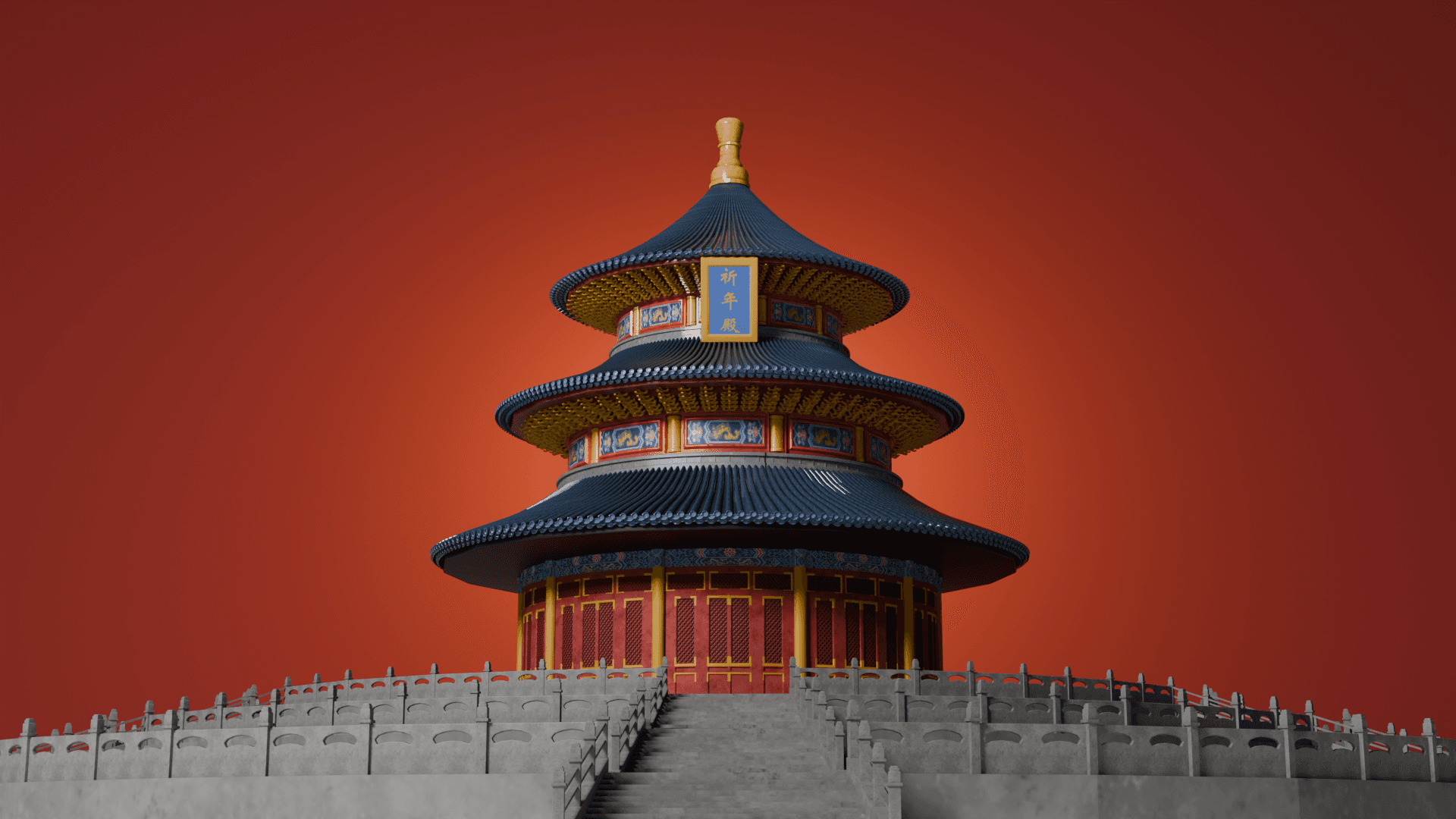
The Temple of Heaven project is a semester-long practice in foundational 3D modeling. I started with basic geometry construction, modeling the temple from the base to the layered rooftops. I then focused on textures and experimented with traditional Chinese art styles, especially Dunhuang-inspired patterns, applied on the temple’s pillars. Although I initially attempted to apply patterns to the foundation, the results were unsatisfactory, so I refined the design on the main body instead.
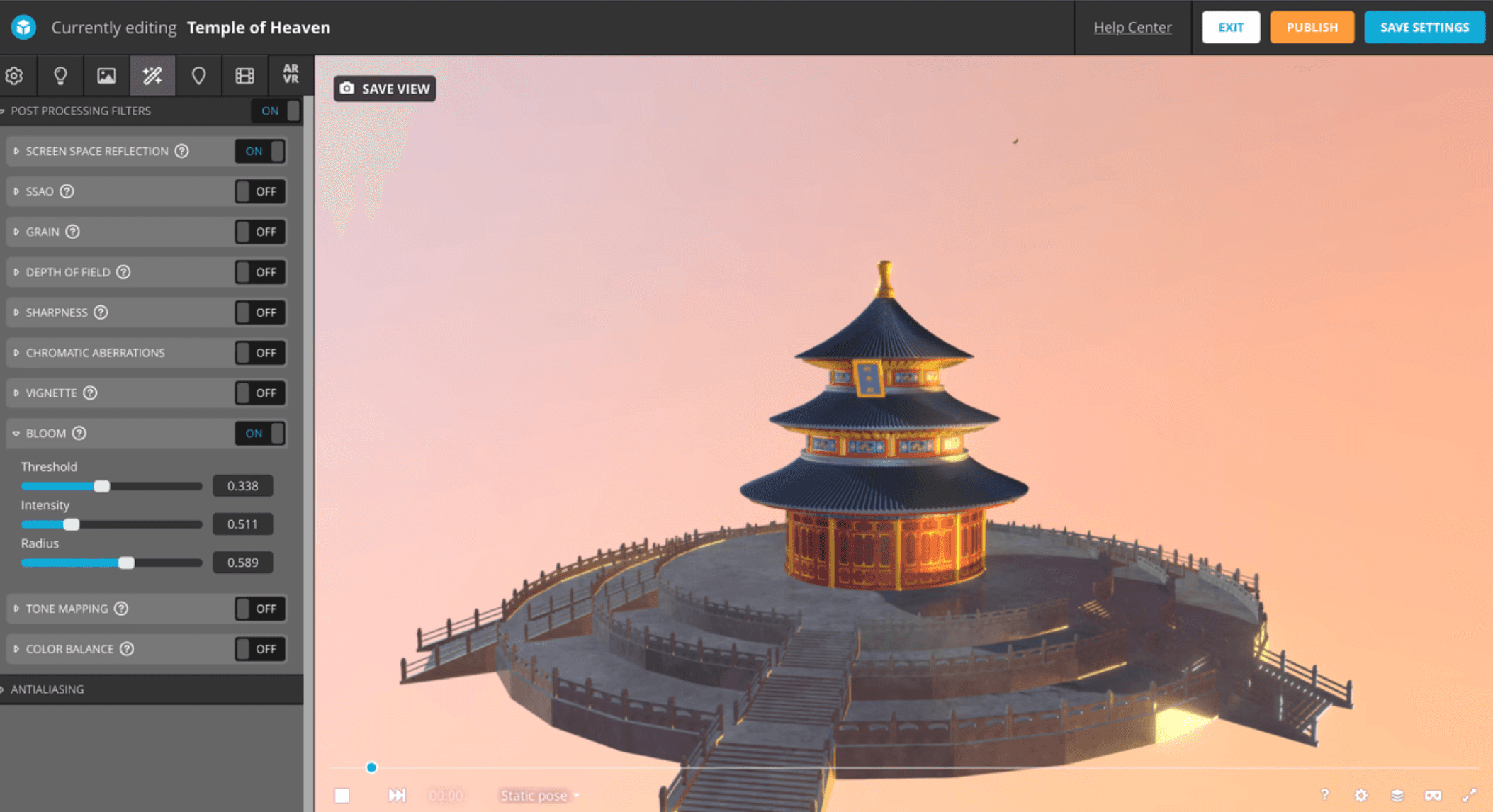
I later created a dove model using primitive shapes (cubes, cylinders, planes), refining it into a symbolic element of peace associated with the Temple of Heaven. Lighting was a major focus: I set up an ambient light and two spotlights in Maya to emphasize architectural details, before moving into animation, where I created CV curve paths for the dove’s flight around the temple. Finally, I imported the model into Sketchfab to polish the atmosphere—using bloom and golden tones to recreate a sunset effect.
Through this process, I not only improved my modeling and texturing skills but also learned how to build animations, experiment with lighting setups, and use rendering/post-processing to achieve mood.
"Well done! This is a big step up in terms of the detail and fidelity of your modelling, and it’s great to see you have the determination and creative maturity to put in the time and effort to improve your work!"
Dr. Liam Gibbons
Course Coordinator, 3D Modeling
Process
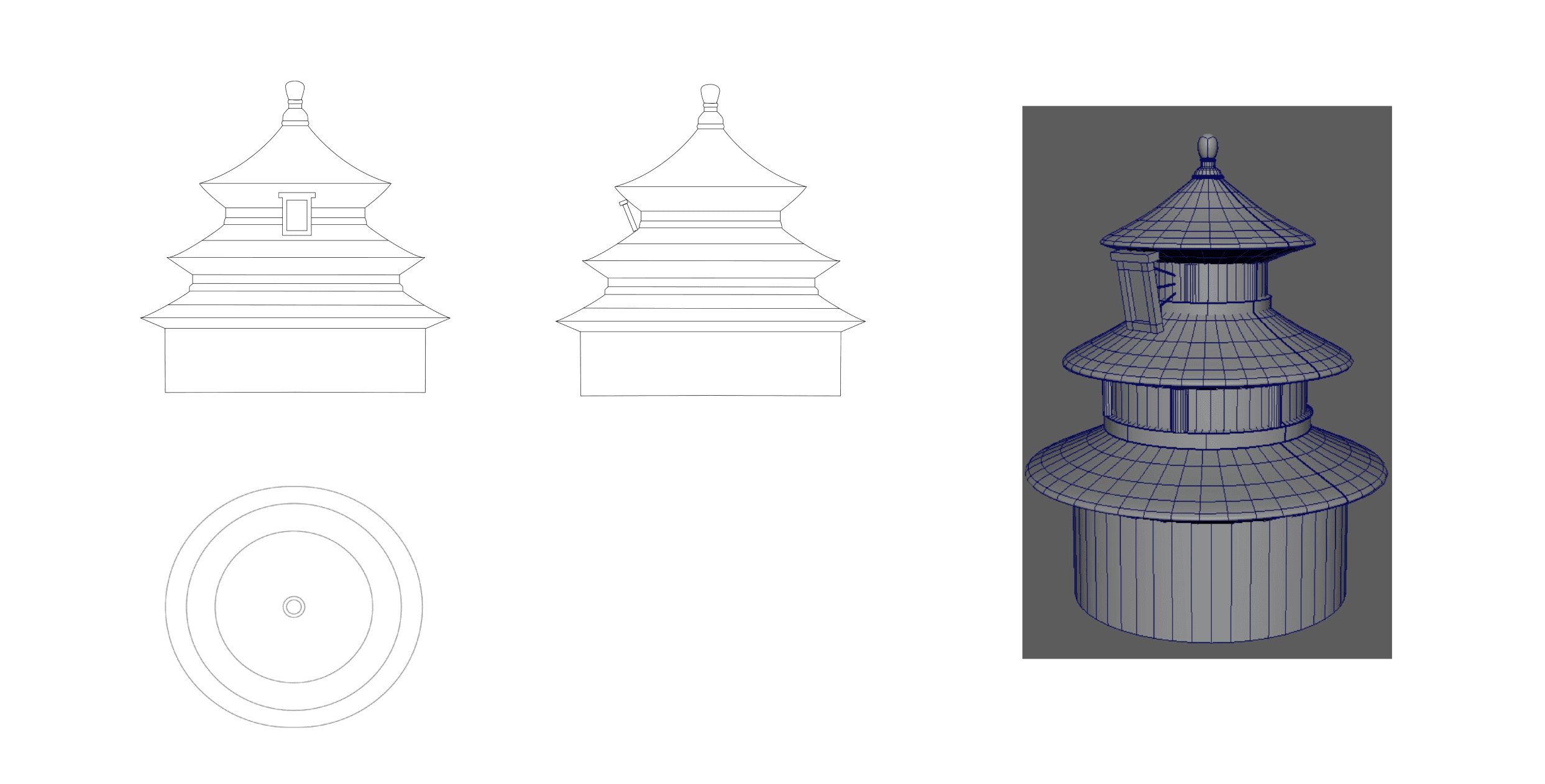
I started this project by deciding on the Temple of Heaven as my subject. To understand its structure, I searched for reference materials online and studied its architectural details through front, side, and top orthographic views. Based on these references, I sketched the three-view drawings myself to better grasp the proportions and design.
With this foundation, I began modeling in Maya. I first blocked out the general silhouette of the temple using simple primitives, then gradually refined the shapes into the iconic circular roofs, pillars, and layered details. Once the main structure was complete, I worked on adding finer details to enhance realism, such as the patterns on the roof edges and the decorative rhythm of the columns.
Texturing
After finishing the base model, I moved on to texturing. My tutor introduced us to the fundamentals of creating textures in Photoshop, where I practiced drawing directly onto UV maps. For example, I painted simple details such as a house, clouds, and trees, and then applied them back onto the model. This exercise helped me understand how 2D drawings translate onto 3D surfaces, and how textures can add personality and storytelling to otherwise plain geometry.
I experimented with more complex textures. My initial idea was to apply traditional Chinese patterns directly to the temple’s foundation, hoping to enrich the lower structure. However, once tested, the result felt heavy and unbalanced, distracting from the overall harmony of the building.
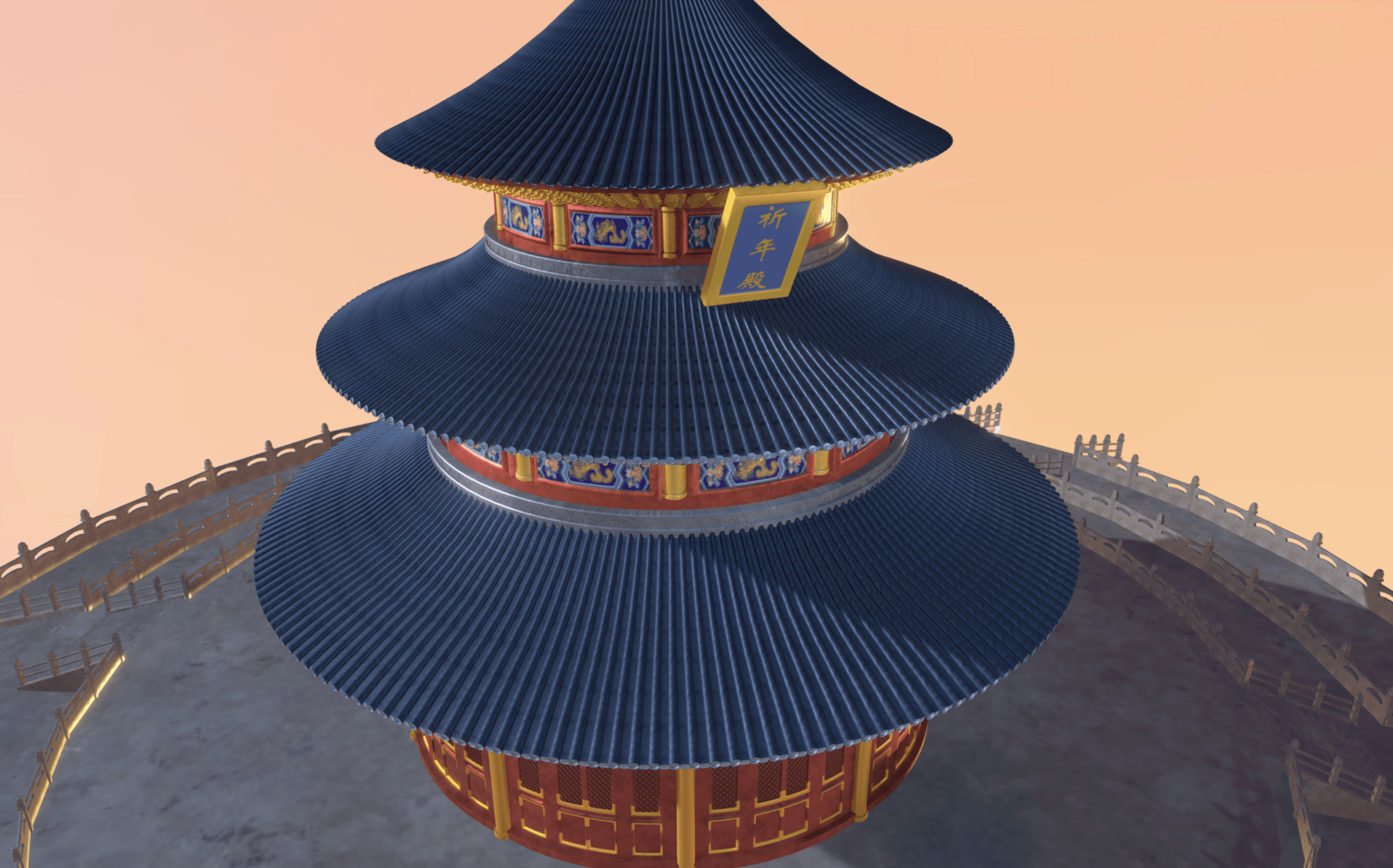
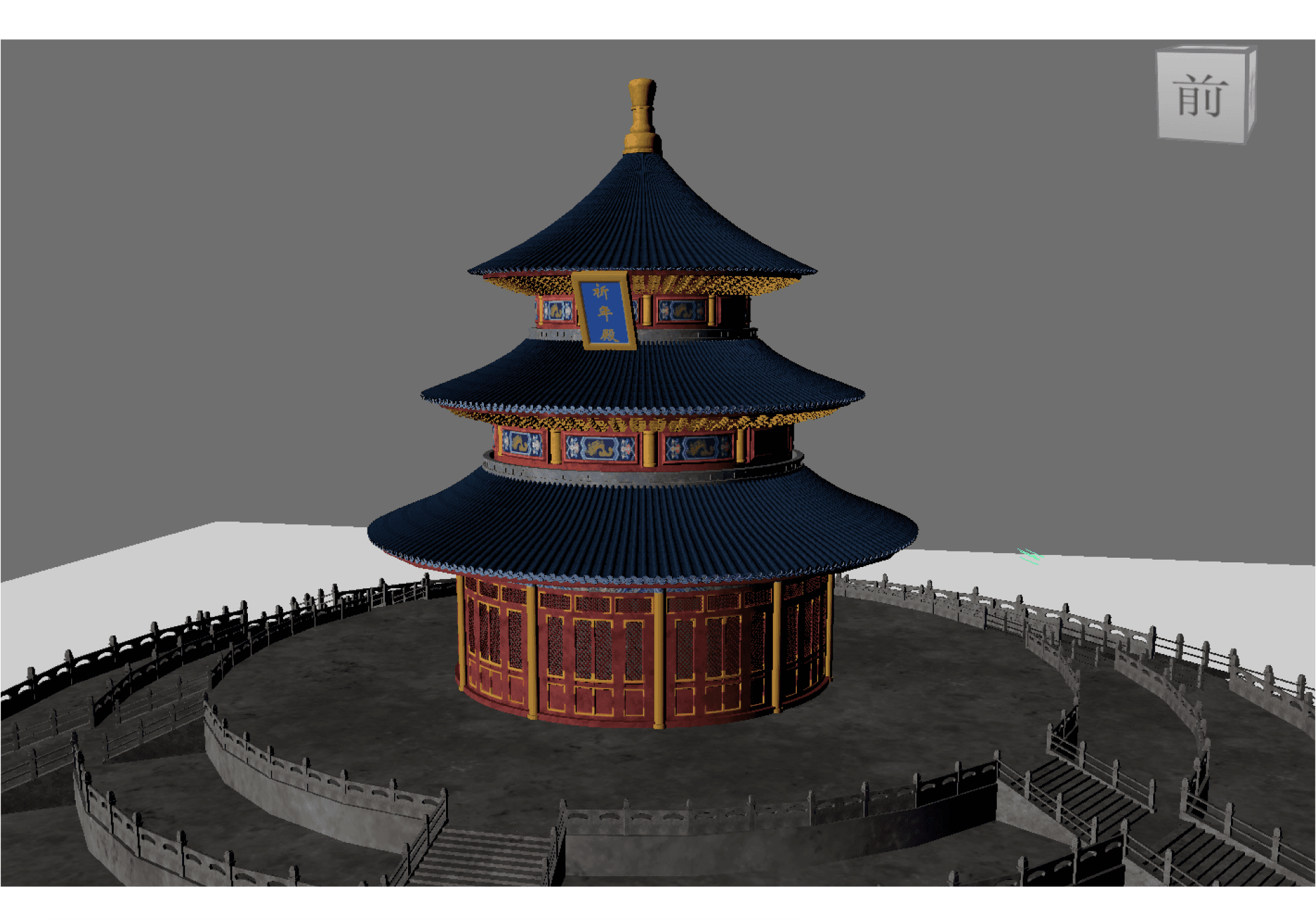
I shifted my focus to the pillars, which are both structurally important and visually prominent. I hand-painted textures inspired by Dunhuang murals and traditional Chinese color schemes, carefully adjusting saturation and contrast so that the patterns complemented the temple rather than overwhelming it.
Through multiple iterations of trial and error, I learned how textures could transform the atmosphere of a 3D model. By placing the patterns on the pillars, I achieved a more elegant balance—the temple gained cultural richness while retaining its majestic form.
Animation
For the animation, my main focus was to bring the dove to life and let it interact naturally with the Temple of Heaven. I began by creating CV curve paths that circled around the temple, carefully planning the bird’s flight trajectory to ensure it complemented the architecture without blocking key views.
Once the path was set, I attached the dove model to the curve and began experimenting with frame counts and timing. At first, the movement felt too mechanical, so I refined the animation by adjusting the speed at different sections of the path—slowing down when the dove approached the temple’s highest roof and accelerating as it glided away. This variation gave the flight a more natural rhythm.
To enhance immersion, I also considered the camera perspective. I tested different camera angles that followed or intersected with the dove’s path, which created a cinematic feeling of movement around the temple. By combining path animation with subtle camera adjustments, the scene shifted from a technical exercise into a visually engaging sequence.
Lighting
Lighting was a crucial part of this project because it not only illuminated the temple but also shaped its mood. I began with a functional setup by adding an ambient light to ensure that the entire model was evenly visible. This provided a neutral base to work from.
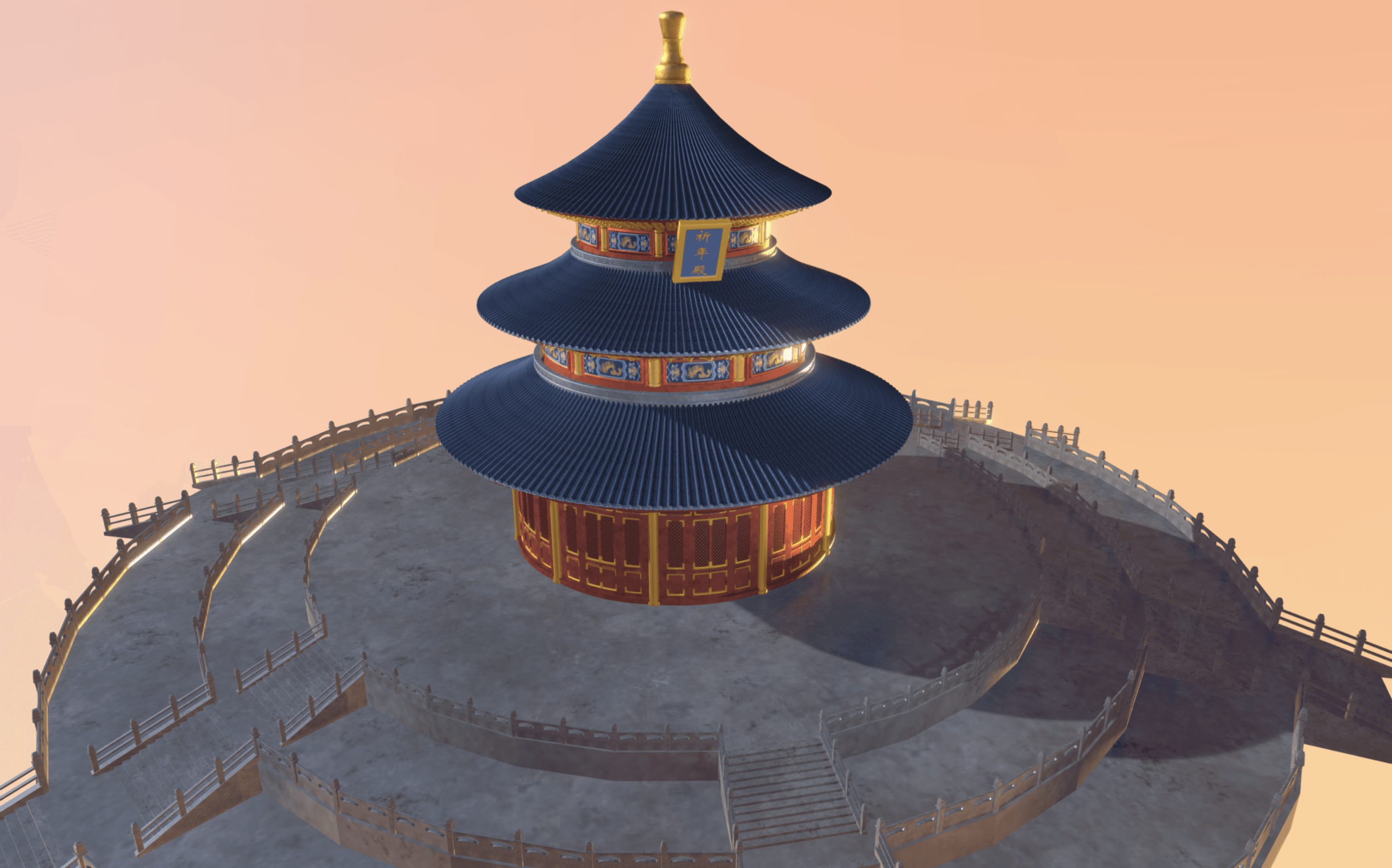
Next, I introduced two spotlights, positioned at different angles, to highlight the layered rooftops and the vertical rhythm of the pillars. These spotlights created contrast between light and shadow, giving the temple more depth and making its architectural details stand out.
After completing the basic setup in Maya, I exported the model as an FBX file and imported it into Sketchfab. There, I focused on atmospheric adjustments—fine-tuning light intensity, color temperature, and shadow softness to simulate the warm glow of late afternoon sunlight. This post-processing stage enhanced the overall mood and transformed the temple from a static model into a scene with narrative qualities, as if the viewer were experiencing a summer evening in Beijing.